Board-level construction executive with 25 years' experience leading multi-million-pound businesses and complex project portfolios across the
UK and Europe. Progressed from trade background to Managing Director, combining deep sector expertise with strategic commercial leadership.
Full P&L accountability across projects and portfolios valued over £300m. A proven record of business turnaround, market re-entry, and margin optimisation, securing an increase of 7% EBITDA and up to 17.6% gross margin to restore commercial momentum.
Recognised construction industry advisor following televised House of Lords, Built Environment Committee inquiry on Modern Methods of Construction (MMC). International experience across regulated healthcare and science estate construction and volumetric modular manufacturing and installation.
Leading large multidisciplinary teams (250+) within complex live environments under JCT/NEC/FIDIC contracts.
Precision in delivery, margin discipline, and structured risk management are not optional in complex construction environments.
Effective commercial protection, realistic programme planning, and clearly defined governance frameworks are crucial in determining whether a business grows sustainably or erodes value.
In regulated, capital-intensive sectors, the quality of leadership directly influences financial performance.
Experienced and correctly qualified executives who understand risk allocation, contract strategy, and operational alignment, are not a luxury; they are fundamental to protecting shareholder value and delivering stable growth.

Skilful, experienced, knowledgeable, and admired, these attributes are recognised by the CIOB and the wider construction industry in a Chartered Fellow of the CIOB.
Becoming a Chartered Fellow signifies proven strategic abilities, as well as people expertise and business impact.
Fellowship accreditation confirms their commitment to inspiring and shaping the future through effective construction leadership skills.
Awarded to those with extensive experience, Fellowship connects individuals to a global network of elite professionals who uphold the highest ethical and professional standards, thereby enhancing their influence and credibility.
Chartered Fellowship with the CIOB signifies the highest level of professional recognition in construction management.
Fellowship of the CIOB carries NARIC certification highlighting FCIOB status is comparable to RQF Level 7 | SQF Level 11 | CQF Level 7. Comparable UK Qualification = Masters Degree.

The APM Fellowship recognises individuals who have made a significant contribution to the profession as practitioners.
Fellows of the APM have reached the pinnacle of the project profession and have actively given back to the community, encouraging others to succeed.
Achieving Fellowship of APM signifies that these experienced professionals have not only advanced project management but have also earned the recognition they deserve for their contributions.
The APM is the only chartered membership organisation dedicated to the project profession.
FAPM accreditation level is equivalent to post graduate certification in Project Management.

Fellows of the IIRSM are experienced professionals who excel in combining strategic insight, risk expertise, and business acumen while prioritising the wellbeing of people to enhance both individual and organisational performance.
This fellowship recognises senior professionals who are transforming the way organisations approach complex management of risk, utilising their expertise to deliver long-term value to both their organisation and the profession.
Fellowship of the IIRSM is equivalent to a level 7 (Masters Degree) certification in the Regulated Qualifications Framework (RQF)

Chartered Fellow CMgr (FCMI) is the highest grade of professional recognition from the CMI, representing senior leaders in their field.
Candidates must have at least 10 years of management experience, including 3 years at a strategic level, and possess a degree-level management qualification.
CMgr (FCMI) signifies exceptional leadership qualification, proving capability in managing change and driving business results.
Backed by Royal Charter, this qualification represents the pinnacle of leadership qualification, pursued by senior leaders globally.
CMgr (FCMI) accreditation is comparable to a level 7 (MBA) certification in the Regulated Qualifications Framework (RQF)
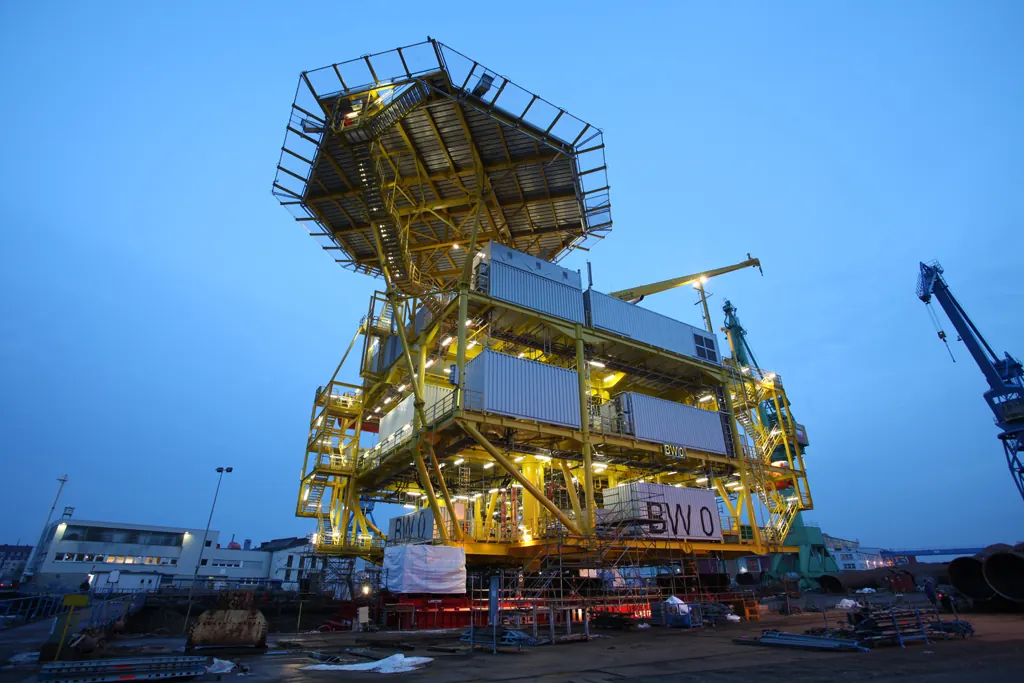
Large-scale infrastructure programmes require disciplined governance, structured risk allocation, and a commercially aligned execution strategy.
Successful delivery is achieved through early stage risk identification, a clear contractual strategy (JCT, NEC, FIDIC), integrated programme controls, and realistic productivity programming across multi-disciplinary teams. In capital-intensive and regulated environments, margin protection is secured by aligning design maturity, procurement strategy, manufacturing capacity, and site execution within a coherent governance structure.
This alignment is crucial for complex stakeholder landscapes, including public bodies, regulated institutions, and international supply chains, demand calm, data-led construction leadership with rigorous financial oversight.
Infrastructure success is not defined solely by programme completion but by predictable performance and delivery, controlled exposure, and sustained commercial integrity across the full lifecycle of delivery.

Healthcare and scientific infrastructure programmes require governance-led leadership, grounded in technical capability and a proven delivery pedigree.
Within live NHS environments and high-containment research facilities, maintaining operational continuity, regulatory compliance, and patient safety is non-negotiable. Effective leadership must integrate clinical sensitivity with commercial discipline, ensuring that design maturity, risk allocation, and construction sequencing are aligned with institutional requirements and financial performance.
By leveraging expertise and combining structured governance frameworks with a detailed understanding of specialist installations, and mission-critical systems, capital exposure is controlled and programme volatility reduced.
The outcome is resilient delivery within environments where failure is neither operationally nor reputationally acceptable.
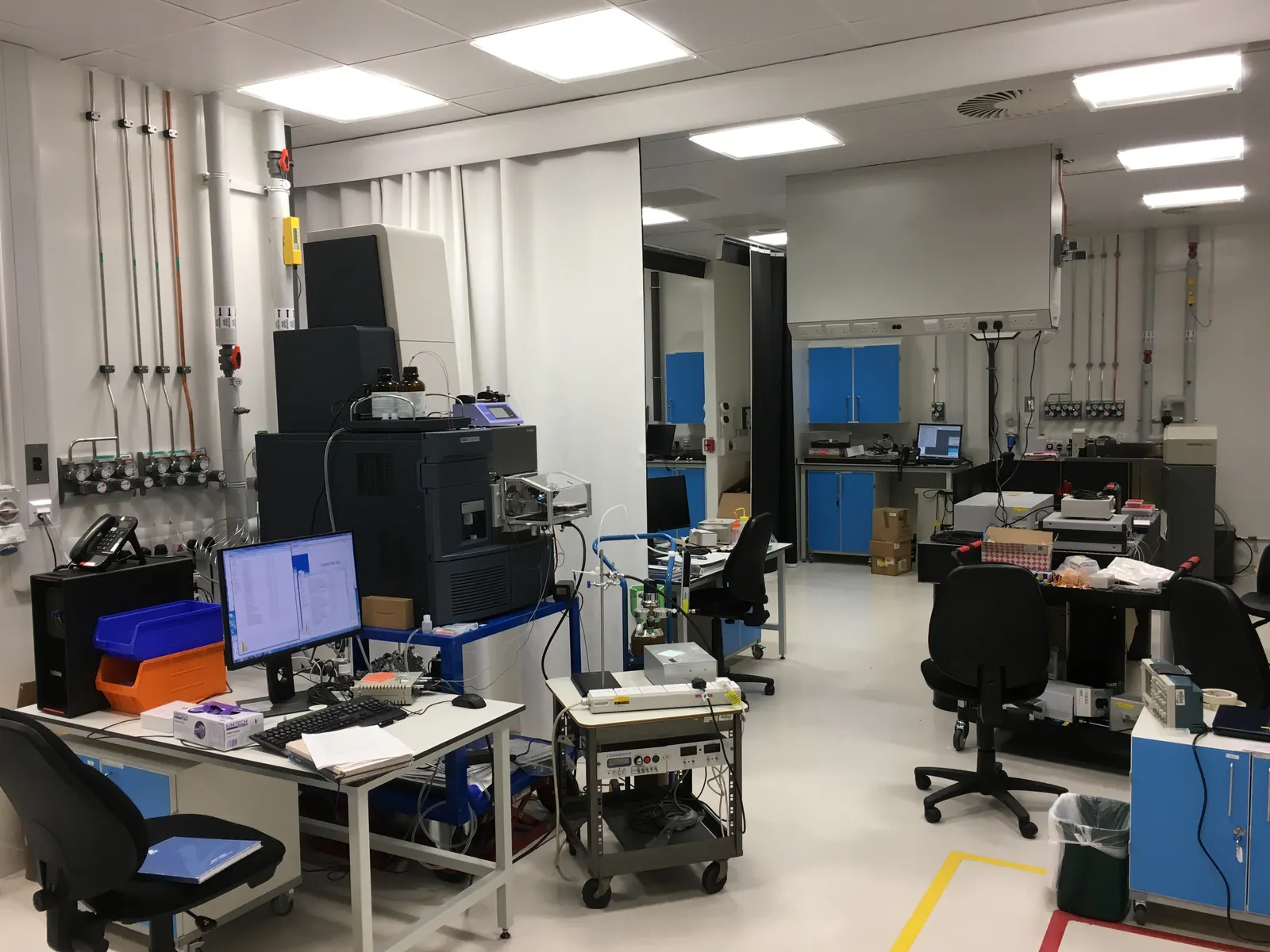
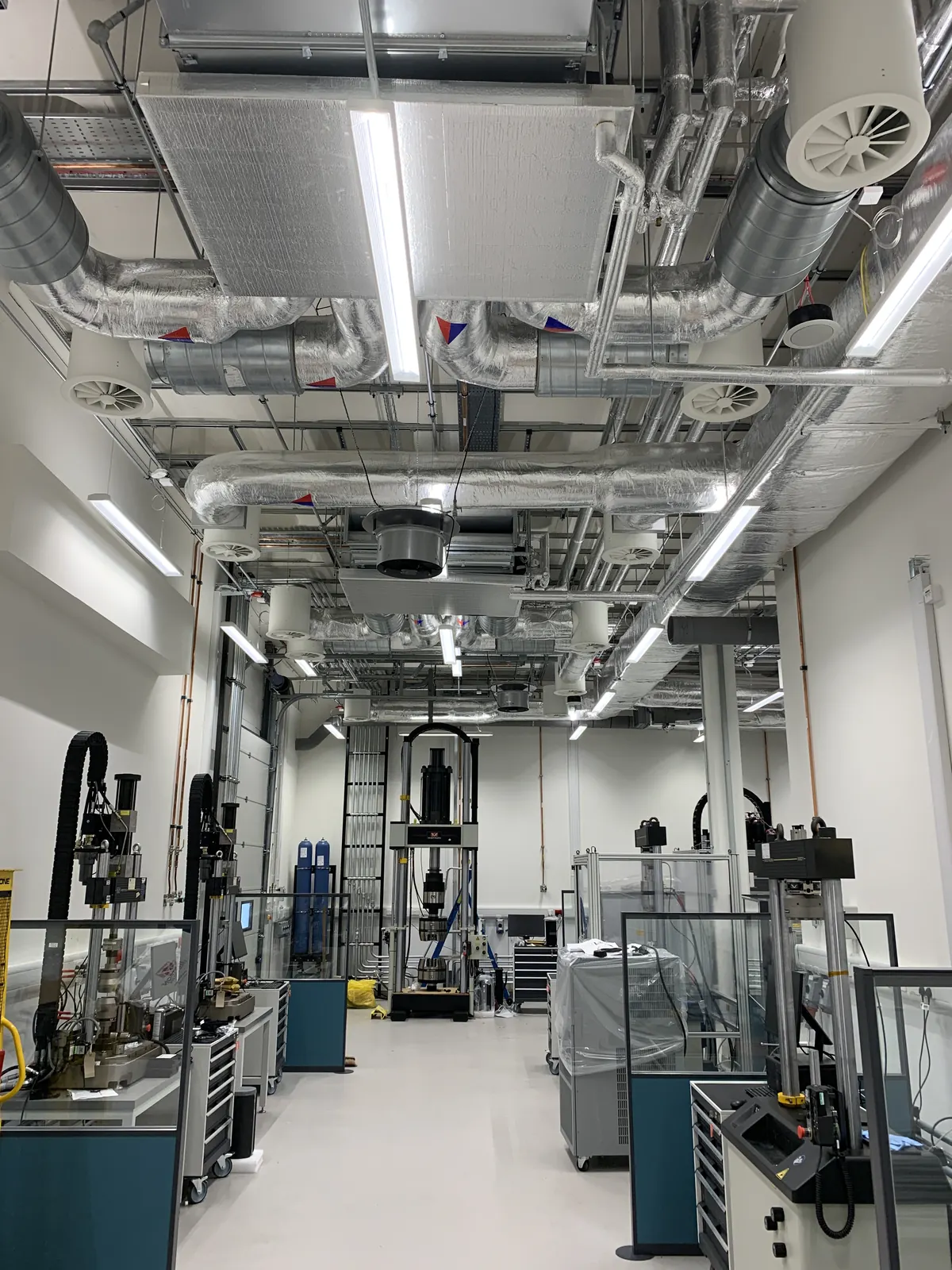
High-specification laboratory, requiring advanced humidification control, is delivered through advanced integrated MEP systems.
This installation enables precise temperature control within ±1°C, while humidity is dynamically adjusted to suit active experiments, all managed through the laboratory’s Building Management System.
In complex regulated scientific environments, precision is an operational necessity.
The delivery of complex, capital-intensive projects demands disciplined commercial stewardship at every stage of the lifecycle.
Margin protection is secured through early-stage risk profiling, structured contract strategy and realistic programme alignment. In regulated and technically demanding environments, commercial exposure must be identified, allocated and governed before construction commences.
Effective leadership integrates financial oversight with operational fluency, ensuring that procurement strategy, design maturity, supply chain capability and production capacity align with contractual obligations and performance objectives.
Predictable outcomes are achieved through transparent reporting, disciplined cost management and proactive mitigation of programme and scope volatility.
Where capital deployment is significant and reputational risk high, commercial responsibility extends beyond completion, requiring the protection of shareholder value, preservation of margin integrity and delivery of sustainable financial performance.
In such environments, commercial leadership defines the difference between controlled growth and value erosion.

Specialist and complex management within operational, high-profile environments demand absolute programme discipline and reputational sensitivity.
Delivering complex structural and subterranean works beneath internationally recognised venues, within immovable event deadlines, requires forensic planning, controlled sequencing, and uncompromising safety governance.
When works are undertaken adjacent to live global sporting events or within facilities hosting international dignitaries and national teams, operational discretion and environmental control are as critical as engineering competence.
Successful execution in such environments depends upon integrated logistics management, secure stakeholder coordination, and precise risk mitigation to eliminate programme slippage.
In scenarios where delivery windows are fixed and public visibility is high, leadership must be calm, structured, and technically assured, ensuring that construction complexity is absorbed without operational disruption.
Such environments do not tolerate reactive management, they demand disciplined executive oversight, anticipatory planning and unwavering control of risk, margin and reputation.
Please feel free to contact me for an introductory conversation.
Today | Closed |